stairs · Sep 06, 2026
Stairs as Public Space
The Kellet Steps join the lower town to the high one, and nobody designed them for sitting. They are the best seat in the city. Why a staircase can be a street.
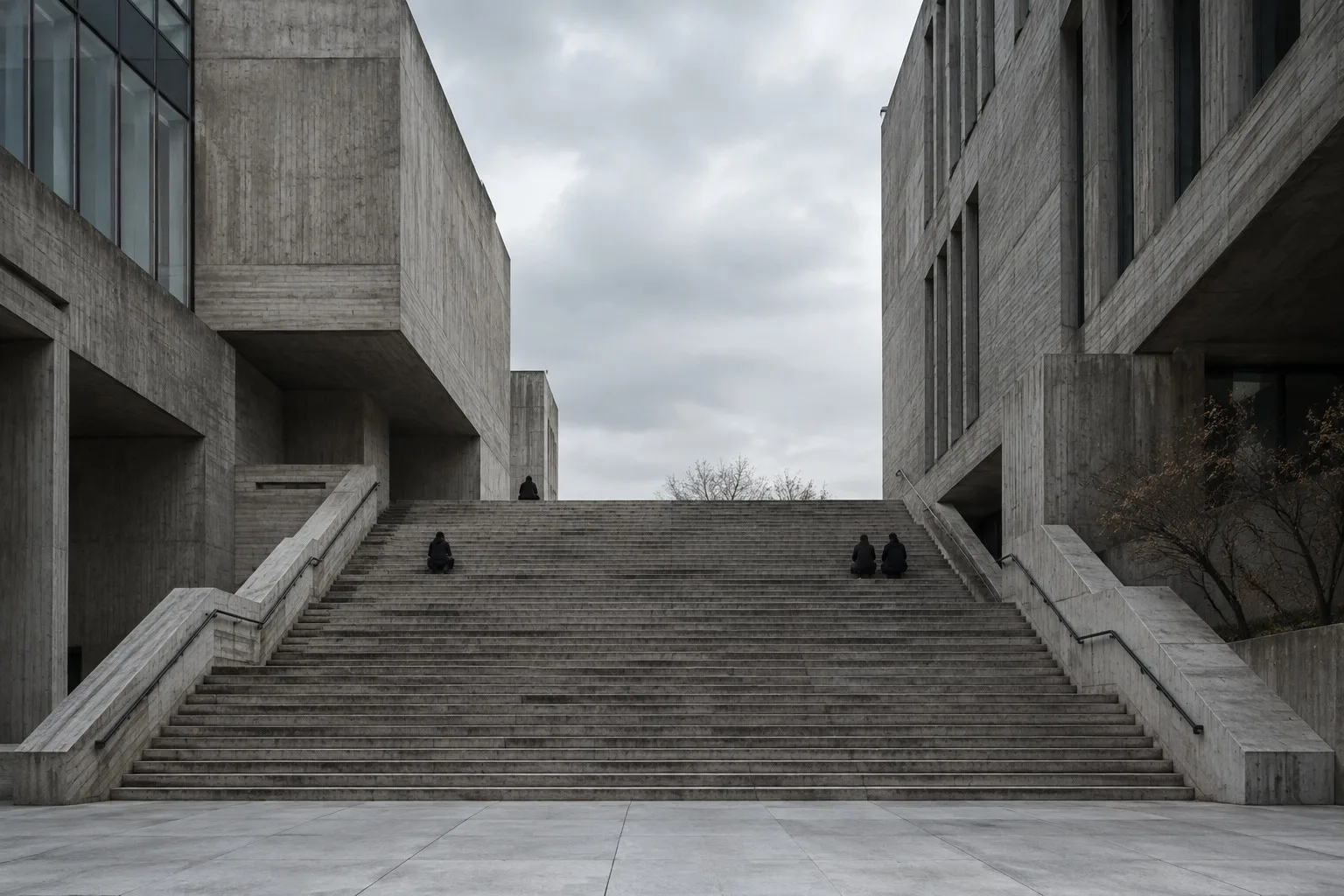
Nobody planned to sit on the Kellet Steps. They were put there to move people uphill.
Brantholm sits on a slope. The old town is on the high ground and the station and market are in the valley, and for a hundred years the connection between them was a narrow alley with a handrail on one side. In the early seventies the council replaced it with a flight of concrete steps, forty metres wide, rising in four broad flights with landings between. It cost more than anyone expected and was criticised for being too big.
It is now the most used public space in the city.
The ratio that works
A good step is a human measurement. The rise, how high you lift your foot, and the going, how deep the tread is, work together. At the Kellet Steps the rise is low and the going is long. You can climb without thinking, which means you can also stop without thinking.
The landings are wider still. They are floors, in effect, with room for a table, a busker, a school group waiting for a teacher. Between them the steps become benches, tiered seating facing the valley. No one has to buy anything to take a seat.
What people do there
Go on a Tuesday lunchtime. Office workers eat on the second flight, because it catches the sun. Students gather on the third. On the top landing, where the wind is strongest, a man sells roasted chestnuts and talks to anyone who stops. Pigeons hold their own parliament on the lowest step.
At six, the light turns amber and the stair goes quiet. At night, the lamps set into the retaining wall draw long shadows across the treads and the place becomes something different, calm and slightly theatrical.
None of this was specified. The designers wrote a brief about movement and structure. The rest arrived on its own, which is how most good public life behaves.
The lesson in the concrete
A flight of stairs works like a street when it is allowed to be generous. A narrow stair is a corridor. A wide one is a place. The difference is measurable, and it is cheap compared to the cost of a plaza that nobody visits.
The material helps. Concrete is a good seat: hard-wearing, a little warm in the sun, easy to clean. It does not need a bench manufacturer, a planting scheme or a sponsorship plaque. It needs only to be left alone and kept in good repair.
A caution
Public space is not self-maintaining. The Kellet Steps have been resurfaced twice, and the second time was badly done, with a coating that turned slippery in the rain. It took eighteen months of complaints before somebody scraped it off.
Which is the quiet subject of the next piece: what it takes to keep all of this standing, and who pays. Maintenance is politics.
No comments yet
Comments are open. Have a thought or a question? Share it below.